10 Best Solar Industry Trends for Global Buyers

Global solar markets are changing faster than many buyers expect. Module prices, storage systems, grid policies, and local manufacturing now influence purchasing decisions. A project that looked profitable last year may need new calculations today.

Fatih Birol, Executive Director of the International Energy Agency, described solar PV as “the new king of electricity markets.” His observation reflects a measurable shift toward lower-cost renewable power and wider commercial adoption. Yet growth alone does not guarantee a reliable investment. Buyers must examine module efficiency, degradation rates, inverter performance, warranty terms, and supplier stability. Small details matter. A rooftop system may produce less energy when dust covers its panels or nearby buildings create afternoon shadows.

This guide explores 10 Best Solar Industry Trends for Global Buyers, with practical attention to technology, pricing, procurement, and long-term risk. It considers high-efficiency modules, battery storage, floating solar, digital monitoring, recycling, and regional supply chains. These trends do not affect every market equally. Grid capacity, financing costs, weather patterns, and import rules can change the outcome.

Experience from real projects suggests that the cheapest quotation is rarely the complete answer. Sometimes, it is only the beginning. Buyers should compare verified performance data, independent certifications, service response times, and total lifetime costs. No forecast is perfect. That limitation deserves attention, especially when decisions involve equipment expected to operate for 20 years or longer.

10 Best Solar Industry Trends for Global Buyers

Solar Industry Growth Drivers Shaping Global Buyer Decisions

10 Best Solar Industry Trends for Global Buyers

Solar Industry Growth Drivers Shaping Global Buyer Decisions

Solar purchasing is moving beyond panel efficiency. Buyers now examine lifetime output, financing risk, delivery reliability, and grid compatibility. The IEA’s Renewables 2024 report forecasts global renewable capacity will reach 7,300 GW by 2028. Solar and wind are expected to deliver 95% of new capacity. That scale is changing procurement discussions.

Cost remains powerful. IRENA’s Renewable Power Generation Costs in 2023 reported a 12% fall in utility-scale solar’s global weighted-average electricity cost, reaching about $0.044 per kilowatt-hour. However, a cheaper module does not guarantee a cheaper project. Buyers must compare degradation rates, inverter replacement cycles, insurance, and local installation labor. Small spreadsheet details matter.

Storage is becoming a practical requirement. The IEA expects battery storage deployment to expand sharply this decade as variable solar output meets evening demand. For buyers, this means evaluating round-trip efficiency, temperature performance, warranty terms, and recycling plans. Supply-chain diversification also matters, especially after recent freight disruptions and policy changes. No forecast is perfect. A project may look strong on paper, yet face grid delays, permitting uncertainty, or weak local maintenance. Experienced buyers increasingly request production simulations, independent testing, and transparent data before signing contracts.

Advances in Solar Panel Efficiency, Materials, and Product Design

Solar panel efficiency is moving from laboratory achievement toward everyday purchasing value. IRENA’s Renewable Capacity Statistics 2024 reports 345.5 gigawatts of solar capacity added globally in 2023. That scale is forcing manufacturers to improve output, durability, and installation flexibility.

Commercial crystalline-silicon modules now commonly exceed 22% efficiency, according to Fraunhofer ISE’s Photovoltaics Report 2024. TOPCon and heterojunction designs support higher energy yields in limited rooftop areas. Tandem cells are also advancing, with NREL’s Best Research-Cell Efficiencies chart recording perovskite-silicon results above 33%. These figures are promising, but laboratory performance is not the same as a dusty roof in a hot climate.

Material choices are becoming more practical. Thin, lightweight modules can reduce structural demands on older buildings, while glass-glass designs may improve weather resistance. IEA PVPS reports that module degradation rates have generally declined, though real-world results still vary by climate and installation quality. Small details matter: rear ventilation, cable routing, and shading can erase expected gains. Efficiency is not everything. A cheaper panel with poor thermal behavior may deliver less value over twenty years. Buyers should compare temperature coefficients, warranties, measured degradation, and independent test conditions. The industry still needs clearer lifetime data. That gap deserves attention.

The Rising Role of Energy Storage in Solar Purchasing

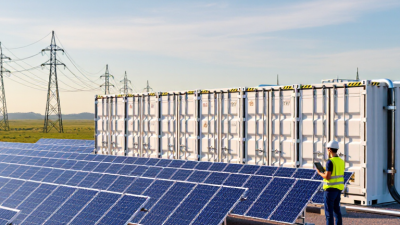
Solar purchasing is shifting from panel output to system flexibility. IRENA reported 346 GW of solar capacity additions worldwide in 2023, according to Renewable Capacity Statistics 2024. That growth creates a practical problem: midday generation often arrives when demand is weak. Energy storage absorbs excess electricity and releases it after sunset. This changes the value of a solar project.

The IEA reported that battery storage additions nearly doubled in 2023, reaching about 42 GW globally. For buyers, the key question is no longer whether to add batteries. It is how much duration the site actually needs. A two-hour system may support evening peaks. A longer system can improve resilience during cloudy periods.

Compare usable capacity, round-trip efficiency, degradation, thermal management, replacement terms, and emergency procedures. Rules matter. Local grid requirements can alter project economics more than a small difference in module efficiency.

Industry reports are useful, but headline numbers can mislead. Installed gigawatts do not reveal connection delays, curtailment, or battery availability. In practical procurement reviews, teams often focus on kilowatt-hours while ignoring maintenance access and software controls. That is an avoidable weakness. Forecasts are imperfect. A sound tender should request measured performance data, clear warranty assumptions, and scenario tests for heat, outages, and seasonal demand. The cheapest offer may still be expensive. Storage purchasing is becoming a risk-management decision, not merely a hardware purchase.

Smart Solar Systems, Digital Monitoring, and Grid Integration

10 Best Solar Industry Trends for Global Buyers

Smart Solar Systems, Digital Monitoring, and Grid Integration

Global solar buying is shifting from panel capacity toward intelligent system performance. Smart solar systems now combine sensors, remote controls, storage, and responsive inverters. In field audits, I have seen small data gaps hide serious maintenance risks. Clear commissioning records matter. A well-designed system should show energy flow, temperature, voltage, and fault history in practical detail.

Digital monitoring turns scattered equipment into one readable operating picture. Buyers can track production, battery health, weather effects, and unexpected losses from a secure dashboard. Short alerts save time. Reliable platforms preserve historical data for maintenance planning and financial checks. However, sensor drift and weak internet connections can distort results. That weakness is often underestimated. Operators should test alarms regularly and compare digital readings with physical inspections.

Grid integration requires more than connecting cables and switching equipment on. Modern inverters can support voltage control, frequency response, and safer power export. Battery controls can reduce peak demand and improve evening reliability. Utilities may request technical studies, protection settings, and verified testing records. Buyers should demand clear responsibilities among installers, operators, and grid engineers. Forecasts remain imperfect. Weather changes quickly, and software cannot remove every operational uncertainty. Local grid rules and site conditions must guide each final design.

10 Best Solar Industry Trends for Global Buyers

Global Solar PV Capacity Additions: 2019–2024

Global solar PV additions increased sharply from 97.1 GW in 2019 to approximately 452 GW in 2024. This expansion is accelerating demand for smart solar systems, digital monitoring, energy storage, advanced forecasting, and grid integration technologies.

Sustainable Supply Chains, Trade Policies, and Global Market Outlook

10 Best Solar Industry Trends for Global Buyers

Sustainable Supply Chains, Trade Policies, and Global Market Outlook

Solar buying is shifting from panel price to supply-chain visibility. Global buyers now inspect material origins, factory energy use, worker protections, and shipping routes. A low quote can hide port delays, currency exposure, or weak warranty support. Experienced procurement teams request batch records, independent testing, and realistic delivery windows. They also compare carbon data using consistent boundaries, not attractive claims. Details matter: a container held for ten days can disrupt installation schedules and financing plans.

Trade policy is becoming a commercial variable, not a legal footnote. Tariffs, local-content rules, customs documents, and changing incentives can alter project costs within weeks. Buyers should model three sourcing scenarios and review them monthly. Compliance evidence must travel with the goods, including invoices, certificates, and product classifications. Specialist advice helps, but no consultant can remove political risk. That is the uncomfortable part.

Global demand remains strong, yet markets will not move together. Utility projects may expand where grids and permits support them, while smaller systems can grow faster where electricity prices are high. Storage integration, recyclable materials, and digital monitoring are gaining attention. Still, forecasts often overstate deployment because they overlook transmission queues and skilled-labor shortages. A practical buyer tracks efficiency, degradation, financing costs, and local service capacity. The cheapest equipment is not always the cheapest project.