
China Top 10 Solar Industry Suppliers for Global Buyers
Choosing a solar supplier is no longer a simple price comparison. Global buyers must examine manufacturing depth, product reliability, certifications, delivery records, and after-sales support. A low quotation may hide longer lead times, weaker warranties, or limited technical service. In the solar industry, those details can affect project returns for twenty-five years.
The International Energy Agency’s Executive Director, Fatih Birol, called solar PV “the new king of electricity markets.” His statement reflects a major market shift, but it also raises a practical question: which suppliers can support this rapid expansion responsibly? This guide introduces ten leading solar industry suppliers serving international buyers. It considers their product portfolios, production scale, technology investment, global reach, and suitability for different project sizes.
The ranking is not absolute. Markets change quickly. Company performance can also vary by region, factory, and contract terms. Some suppliers excel in high-efficiency modules, while others offer stronger pricing or broader project services. Buyers should verify current certifications, warranty conditions, shipment history, and financial stability before signing agreements.
Real procurement happens beyond a product brochure. It involves checking pallet protection, reviewing test reports, confirming inverter compatibility, and asking how claims are handled after installation. Small details matter. A damaged shipment can delay an entire construction schedule.
This overview offers a practical starting point, not a final verdict. It may also miss emerging manufacturers with strong regional advantages. Careful buyers should compare these suppliers against their own climate, financing, grid, and compliance requirements.
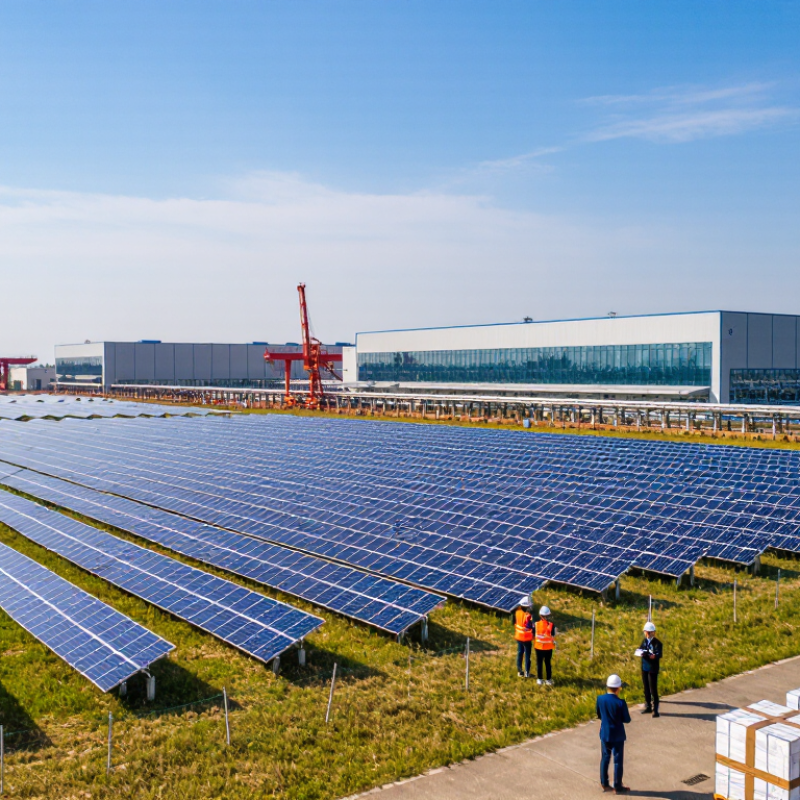
China’s Solar Industry and Its Role in Global Supply Chains
China’s solar industry sits at the center of global supply chains. IRENA’s Renewable Capacity Statistics 2024 recorded 1,419 GW of global solar capacity by the end of 2023. China contributed about 609 GW, making its manufacturing scale difficult to replace quickly. The IEA reported that China held over 80% of global solar module manufacturing capacity in 2021. Its influence extends across polysilicon, ingots, wafers, cells, modules, glass, and equipment.
This concentration lowers production costs and supports rapid project delivery. It also creates supply-chain exposure when shipping, energy prices, or trade policies change. A buyer may receive competitive quotations, yet overlook inventory age, factory utilization, or quality controls. That is where practical verification matters. Request traceable production records, independent test reports, and clear delivery milestones. Capacity figures can sound impressive. Actual output may differ.
Tips: Compare at least three suppliers, not only their prices. Check warranty terms, product certification, degradation data, and after-sales response times. IEA PVPS Trends 2024 estimated global photovoltaic additions at more than 440 GW in 2023, showing how quickly demand is expanding. Buyers should therefore assess financial stability and logistics capacity, not just factory size. Diversifying sourcing can improve resilience, though it may increase short-term costs and coordination work.
China Top 10 Solar Industry Suppliers for Global Buyers - China’s Solar Industry and Its Role in Global Supply Chains
An anonymized overview of the ten major supplier segments that form China’s solar photovoltaic manufacturing and export ecosystem.
| Rank | Anonymous Supplier Segment | Primary Product | Typical Commercial Specification | China’s Approximate Role in Global Supply | Main Use for Global Buyers |
|---|---|---|---|---|---|
| 1 | Polysilicon Suppliers | Solar-grade polysilicon | High-purity electronic-grade and solar-grade silicon feedstock, commonly above 99.9999% purity. | Approximately 90–95% of global polysilicon manufacturing capacity in recent industry assessments. | Raw material for monocrystalline ingot and wafer production. |
| 2 | Ingot Manufacturing Suppliers | Monocrystalline silicon ingots | Large-format monocrystalline ingots, commonly designed for 182 mm and 210 mm wafer platforms. | Approximately 90–95% of global ingot manufacturing capacity. | Feedstock for high-efficiency photovoltaic wafer production. |
| 3 | Wafer Suppliers | Monocrystalline silicon wafers | N-type and P-type wafers, generally using 182 mm or 210 mm formats with thicknesses commonly below 150 micrometres. | More than 95% of global wafer manufacturing capacity according to recent international energy-sector assessments. | Core semiconductor substrate for solar cell manufacturing. |
| 4 | Solar Cell Suppliers | PERC, TOPCon and heterojunction cells | Commercial cell formats commonly matched to 182 mm and 210 mm module designs; N-type TOPCon is widely adopted for new capacity. | Approximately 85–90% of global cell manufacturing capacity. | Cell supply for module assembly, project development and contract manufacturing. |
| 5 | PV Module Suppliers | Crystalline-silicon photovoltaic modules | Typical utility-scale modules range from approximately 430 W to more than 700 W, using glass-glass or glass-backsheet construction. | Approximately 80–85% of global module manufacturing capacity and a leading source of exported modules. | Utility-scale solar farms, commercial rooftops, residential systems and distributed generation. |
| 6 | PV Glass Suppliers | Low-iron tempered solar glass | Typically 2.0–3.2 mm heat-strengthened or tempered glass with anti-reflective treatment and high solar transmittance. | China is the world’s dominant manufacturing base for photovoltaic glass, supplying a substantial majority of global demand. | Front and rear encapsulation layers for glass-backsheet and glass-glass modules. |
| 7 | Aluminum Frame Suppliers | Anodized aluminum module frames | Lightweight extruded aluminum profiles with corrosion-resistant anodized finishes and configurations for standard module dimensions. | A major global production and export base, supported by extensive aluminum extrusion capacity. | Mechanical protection, module mounting and structural reinforcement. |
| 8 | Junction Box and Connector Suppliers | Junction boxes, bypass diodes and PV connectors | Common designs use IP68-rated enclosures, bypass diodes and cable systems rated for outdoor DC photovoltaic applications. | A major manufacturing and export center with broad supporting capabilities in plastics, copper and electrical components. | Electrical interconnection, module protection and field wiring for PV arrays. |
| 9 | Solar Inverter Suppliers | String, central and hybrid inverters | Products range from small residential units to utility-scale systems exceeding 1 MW, with grid-support and monitoring functions. | One of the world’s largest inverter manufacturing and export bases, serving both domestic and overseas markets. | DC-to-AC conversion, grid synchronization, energy monitoring and battery integration. |
| 10 | Mounting and Tracker Suppliers | Fixed-tilt structures and single-axis trackers | Galvanized steel or aluminum systems designed for rooftop, ground-mounted and utility-scale projects; tracker layouts commonly use one-axis rotation. | A major global source of cost-competitive steel and aluminum solar structures and tracker components. | Module installation, wind-load management, terrain adaptation and energy-yield optimization. |
Note: Market-share figures are approximate ranges reflecting manufacturing capacity and supply-chain assessments published for the 2023–2024 period. Actual shares vary by product category, technology, reporting method and year.
Related Posts
-
How to Choose the Best PV Solar Panels in 2026?
-
Top 10 Solar Technology Trends for Global Buyers
-
How to Choose the Best Solar Technology for Your Business?
-

Top 5 Tips for Sourcing Solar Energy Solutions Globally?
-
Why Is Solar Energy the Future of Global Procurement?
-
How to Source Solar Panels in 2026 for Global Buyers?