Choosing among the 2026 Best Solar Power Systems for Global Buyers requires more than comparing panel wattage. Climate, roof design, electricity prices, grid reliability, and local service can change the best option.
Fatih Birol, Executive Director of the International Energy Agency, has said, “Solar PV is now the cheapest source of electricity in many parts of the world.” His observation explains the market’s rapid growth, but price alone should not guide a purchase. A reliable system also needs efficient panels, a suitable inverter, safe battery storage, and clear warranty support.
Small details matter. A home in Dubai may need dust-resistant panels and strong cooling performance. A cabin in Norway may require better winter output and battery planning. A coastal property may need corrosion-resistant hardware. These differences make global comparisons difficult.
There is no perfect system.
This guide examines leading solar power solutions through measurable factors, including efficiency, durability, storage capacity, installation flexibility, monitoring tools, and long-term value. It also considers real ownership concerns, such as cloudy-day performance, replacement costs, software access, and installer expertise. Product specifications can look impressive on paper, yet field results may vary. That deserves honest attention.
Buyers should verify certifications, local incentives, grid standards, and after-sales coverage before signing a contract. Independent testing can help, but no review replaces a site assessment. The strongest choice is not always the most powerful system. It is the system that performs consistently, remains serviceable, and matches the buyer’s actual energy needs.
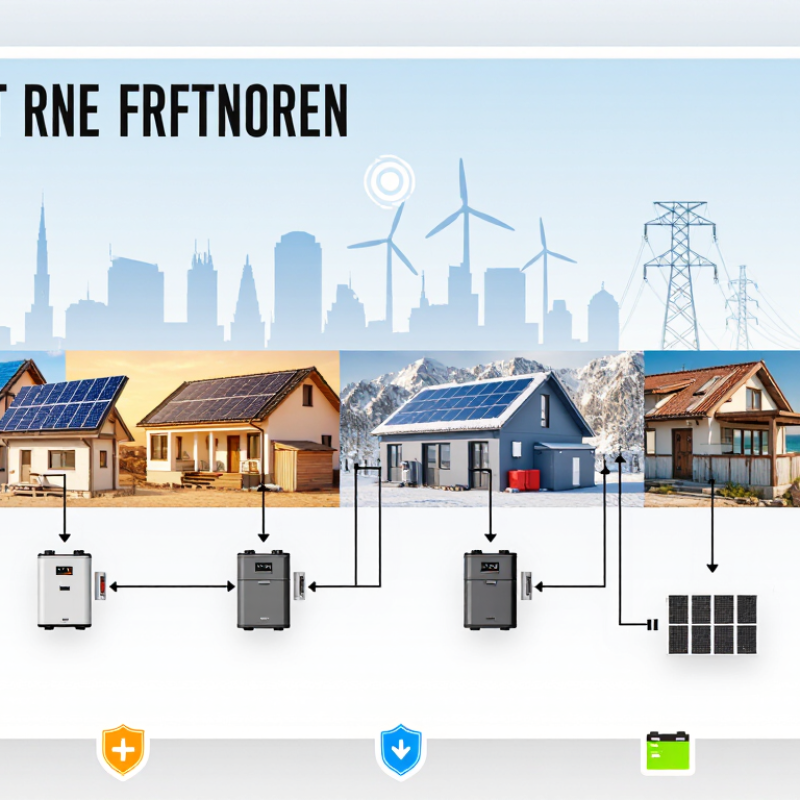
A solar power system converts sunlight into usable electricity, but each component has a defined job. Photovoltaic panels produce direct current (DC) when light reaches their cells. An inverter changes DC into alternating current (AC) for household circuits. Mounting rails hold the array at a safe angle, while cables, fuses, and disconnects control energy flow. A monitoring device records output and exposes faults that are easy to miss.
Different system types suit different conditions. Grid-tied systems send surplus electricity to the public network and usually omit batteries. Off-grid systems use batteries, charge controllers, and often a backup generator for cloudy periods. Hybrid systems combine grid access with storage. They can keep essential loads running during outages, but battery sizing remains critical. A refrigerator, pump, and evening lights may need more stored energy than a small cabin owner expects.
Real installation work demands more than a panel count. Roof direction, seasonal shade, wind exposure, local voltage, and maintenance access all affect performance. In site assessments, I would check shade at several hours, not just at noon. Small shadows can reduce output across a whole string. This is often underestimated. A system can look impressive and still waste energy through poor cable routing or incorrect settings. Buyers should request load calculations, equipment certificates, protection details, and clear warranty terms from qualified installers. Even careful planning has uncertainty, especially where weather data is limited.
Choosing a solar power system in 2026 starts with energy demand, not panel count. Review twelve months of electricity bills and mark seasonal peaks. A home using 20 kWh daily may need about 5 kW of panels, assuming five peak-sun hours and an 80% system factor. That factor covers heat, wiring, dust, inverter losses, and imperfect orientation. Local weather matters more than a global average.
Efficiency affects roof space. Fraunhofer ISE’s Photovoltaics Report 2024 places many commercial crystalline-silicon modules near 20–23% efficiency. Higher efficiency helps on small roofs, but it may not deliver the lowest lifetime cost. Compare annual energy yield, temperature behavior, degradation assumptions, and installation conditions. A shaded chimney can erase the benefit of an impressive laboratory number. Real roofs are untidy.
Storage requires a separate calculation. If evening use reaches 8 kWh, a battery rated at 10 kWh may provide only 8 kWh when an 80% usable-depth limit is applied. Include cloudy days, backup priorities, and battery round-trip losses. The IEA’s Renewables 2024 report estimated nearly 550 GW of solar PV additions in 2024, showing how quickly the market is scaling. Yet rapid deployment does not remove local risk. Grid rules, export limits, and extreme temperatures can change the result. I would challenge any quote based on one “average” day. A spreadsheet can look precise and still be wrong.
Estimated annual electricity generation by solar system capacity
The estimates use a planning yield of 1,200 kWh per kWp per year, a practical global reference value for comparing system sizes. Actual output depends on solar irradiation, module efficiency, orientation, shading, temperature, inverter losses, and local weather conditions. Buyers should match annual generation with their electricity demand and confirm local solar resources before selecting capacity.
For global buyers, the right solar system depends on grid quality, daily loads, and backup expectations. An on-grid system sends excess electricity to the utility network. It usually costs less because it needs no large battery bank. However, it normally shuts down during outages. That detail surprises some buyers.
The IEA’s Renewables 2024 report expects almost 4,600 GW of new renewable capacity between 2024 and 2030. Solar PV represents the largest share of this expansion. IRENA’s Renewable Capacity Statistics 2025 recorded about 1,865 GW of global solar capacity by the end of 2024. These figures show strong market momentum, but they do not guarantee equal performance everywhere. Grid rules, sunlight, and local installation quality still matter.
Off-grid systems suit remote homes, farms, and sites without reliable utility service. They require batteries, careful load management, and enough panels for poor-weather periods. A hybrid system combines grid supply, solar generation, and battery storage. It can keep refrigeration, pumps, or internet equipment operating during short outages. More flexibility means more controls and maintenance. Battery replacement costs also deserve honest attention.
A practical buyer should measure evening consumption first. A 5 kW array may look impressive, yet it cannot solve heavy nighttime demand without storage. Some designs also oversize batteries. That can waste capital. Experienced installers should provide production estimates, battery cycling assumptions, protection details, and local compliance documents before purchase.
| Comparison Dimension | On-Grid Solar Power System | Off-Grid Solar Power System | Hybrid Solar Power System |
|---|---|---|---|
| Primary operating principle | Solar energy supplies local loads, while excess electricity is exported to the public grid. | Solar energy and batteries supply loads without a permanent connection to the public grid. | Solar energy, batteries, and the public grid work together through an energy-management system. |
| Best suited for | Homes, commercial buildings, and facilities with reliable grid access and suitable export rules. | Remote homes, farms, islands, telecom sites, and other locations where grid connection is unavailable or impractical. | Properties that need backup power, want to reduce grid consumption, or experience frequent outages. |
| Battery requirement | Not required for standard operation; batteries may be added for backup or self-consumption. | Essential. Battery capacity must cover nighttime demand and periods of low solar production. | Normally included; battery size depends on backup-load requirements and outage duration. |
| Typical battery chemistry | Optional lithium iron phosphate or other lithium-ion batteries; lead-acid can also be used in some applications. | Lithium iron phosphate is widely used for its cycle life and usable depth of discharge; lead-acid remains an alternative for lower-cost installations. | Lithium iron phosphate is commonly selected for frequent daily cycling and backup applications. |
| Grid dependence | High. Most standard systems shut down during a grid outage unless approved backup equipment is installed. | None during normal operation, provided solar generation and stored energy are sufficient. | Low to moderate. The system can use the grid when solar and battery energy are insufficient. |
| Power during grid outages | Usually unavailable unless a backup inverter, battery, and approved transfer equipment are installed. | Available continuously within the limits of the inverter, battery, solar array, and optional generator. | Available for selected or whole-building loads, depending on system design and battery capacity. |
| Common inverter configuration | Grid-tied string inverter or microinverters. | Off-grid inverter/charger with charge-control functions and optional generator input. | Battery-based hybrid inverter with grid-interactive and backup functions. |
| Typical PV module efficiency | Approximately 18%–23% for commercially available crystalline-silicon modules. | Approximately 18%–23% for commercially available crystalline-silicon modules. | Approximately 18%–23% for commercially available crystalline-silicon modules. |
| Energy-storage round-trip efficiency | Not applicable without a battery; approximately 75%–90% when storage is added, depending on battery and inverter technology. | Commonly approximately 75%–90%, with losses affected by temperature, battery chemistry, inverter loading, and operating strategy. | Commonly approximately 75%–90%, depending on the battery, inverter, and charge-discharge pathway. |
| System sizing priority | Annual electricity consumption, roof area, solar resource, local grid limits, and export policy. | Peak load, daily energy use, consecutive low-sun days, battery autonomy, and backup-generation requirements. | Critical-load demand, desired backup duration, peak power, solar resource, and electricity tariff structure. |
| Typical installation complexity | Low to moderate, but utility approval and anti-islanding compliance are normally required. | Moderate to high because the system must independently manage generation, storage, and load stability. | Moderate to high because grid interaction, backup circuits, batteries, and energy controls must be coordinated. |
| Maintenance considerations | Module cleaning where necessary, visual inspections, inverter monitoring, and electrical checks. | All on-grid maintenance plus battery health checks, generator servicing where applicable, and closer energy monitoring. | Module and inverter inspections, battery monitoring, firmware management, and backup-function testing. |
| Main advantage | Generally the simplest way to reduce grid electricity purchases without installing storage. | Provides energy independence in locations without dependable grid service. | Balances solar self-consumption, energy backup, and continued access to grid electricity. |
| Main limitation | Standard systems do not provide power during grid failures, and export rules vary by country. | Higher upfront cost and greater risk of energy shortages during extended periods of low solar production. | Higher upfront cost and greater design complexity than a basic grid-tied system. |
Note: Performance ranges are typical industry values for modern solar and battery technologies. Actual results depend on climate, system design, equipment specifications, installation quality, local regulations, and operating conditions.
Choosing a solar power system in 2026 requires more than comparing panel wattage. Climate, standards, costs, and maintenance determine real performance.
In hot regions, panels may lose output as cell temperatures rise. Coastal buyers should check corrosion resistance, sealed connectors, and mounting hardware. Snowy locations need strong frames and safe snow-load calculations. Dusty environments demand practical cleaning access. A rooftop that looks ideal may still create shading problems at 4 p.m.
Local standards protect both buyers and installers.
Confirm grid-connection rules, electrical certifications, fire-safety requirements, and warranty conditions before purchasing. In many markets, equipment must meet recognized international testing standards and local inspection rules.
Qualified installers should provide load calculations, cable diagrams, grounding details, and commissioning records.
Documents matter. Verbal promises are not enough. Requirements can change, so buyers should verify them with local authorities or licensed professionals.
System cost includes transport, permits, batteries, installation, monitoring, and future replacement parts.
The cheapest quotation may exclude scaffolding or difficult roof work. A battery can improve backup power, but it also adds thermal management and replacement costs.
Maintenance should include visual inspections, connector checks, inverter cleaning, and performance monitoring. Monthly output data can reveal a failing component before a large loss occurs.
I would not trust one payback estimate without checking weather data and electricity prices. Forecasts are useful, but imperfect. Real roofs are rarely perfect.
The best solar power system depends on the application, not its headline wattage. A home with evening electricity demand needs battery storage, while a daytime workshop may perform well with direct solar supply. According to IRENA’s Renewable Capacity Statistics 2025, global solar capacity reached about 1,865 GW by the end of 2024. That scale brings more choices, but also more confusion.
For remote clinics, farms, and telecom sites, prioritize dependable batteries, simple maintenance, and protection against heat and dust. Lithium-based storage usually offers strong cycle performance, but temperature control remains important. Off-grid buyers should calculate several cloudy days, not only average sunlight. Small mistakes become expensive.
For factories and commercial buildings, assess roof structure, load profiles, grid rules, and export limits. The IEA’s Renewables 2024 report expects solar PV to provide nearly 80% of renewable capacity growth through 2030. High-efficiency modules can help where roof space is limited, although higher efficiency does not always mean better value. Review temperature coefficients, inverter behavior, warranties, and local service access. IEC testing can support quality assessment, but certificates do not replace independent installation checks. I have seen projects overvalue panel output and underestimate wiring losses. That deserves a second look. A practical comparison should include lifetime energy, replacement risks, financing terms, and performance during the least favorable season.