How to Choose the Right Solar Junction Box in 2026?

Solar power is expanding at a pace that makes small component decisions increasingly important. IRENA’s Renewable Capacity Statistics 2025 reports 585 GW of renewable capacity added worldwide in 2024. Solar contributed approximately 452 GW, or more than three-quarters of that growth. Every module, therefore, depends on reliable electrical protection, sealing, and heat management.

A solar junction box is not merely a plastic enclosure attached to a panel. It carries current, protects bypass diodes, and helps maintain circuit safety under heat, moisture, dust, and mechanical stress. The right choice should match the module’s maximum voltage, operating current, cable size, connector system, and installation environment. Check rated temperature, enclosure protection, diode performance, flame resistance, and material durability. IEC 62790 provides an important reference for photovoltaic junction boxes, while IEC 62852 addresses photovoltaic connectors. These standards support disciplined evaluation, but they do not replace supplier verification.

The IEA PVPS Trends in Photovoltaic Applications 2024 report recorded more than 400 GW of global photovoltaic capacity added during 2023. That scale increases pressure on manufacturers to control quality consistently. Ask for traceable test records, production inspection data, and evidence of long-term thermal cycling. Look closely at the diode area. Poor heat dissipation can leave darkened plastic near the terminals. That detail matters. No checklist is perfect. Field conditions can expose weaknesses that laboratory tests miss. Choosing well means comparing certified performance with real installation experience, not selecting the lowest quoted price.
How to Choose the Right Solar Junction Box in 2026?

What Is a Solar Junction Box and Why Does It Matter?

How to Choose the Right Solar Junction Box in 2026?

What Is a Solar Junction Box and Why Does It Matter?

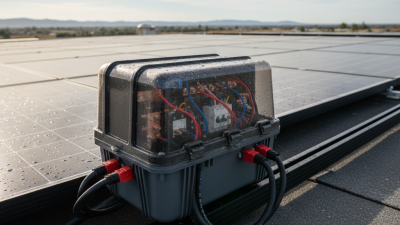
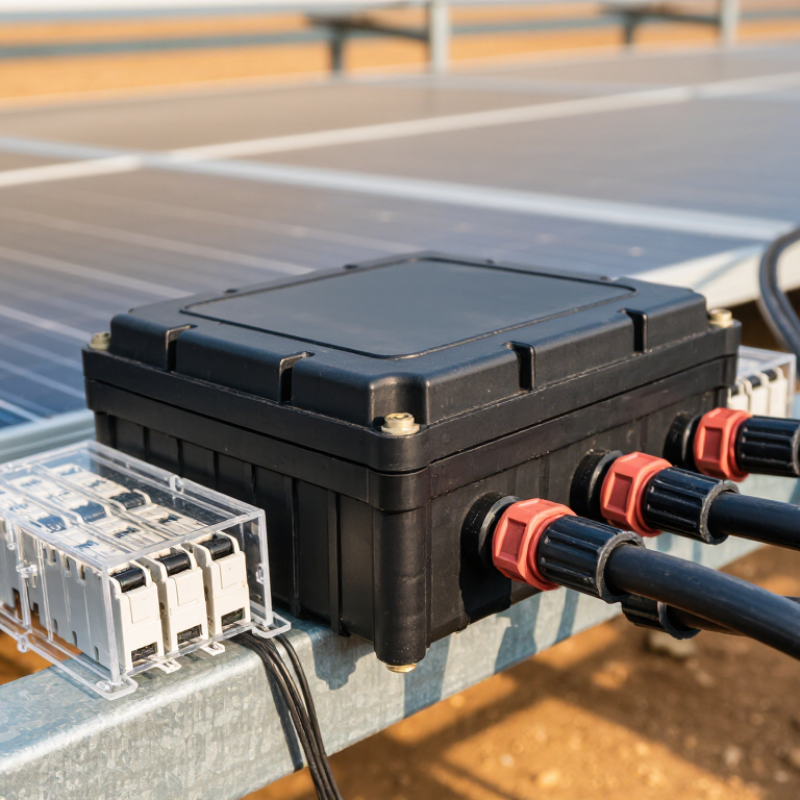
A solar junction box is the small enclosure fixed to a module’s rear side. It connects cell ribbons, houses bypass diodes, and transfers power through external cables. It looks simple. Its job is not.

During field inspections, moisture marks, loose connections, and overheated diodes can expose weak designs. A poor junction box may increase resistance, create hot spots, or interrupt current during partial shading. The IEA PVPS Trends 2024 report recorded about 407 GW of new photovoltaic capacity in 2023. At this scale, small component failures can affect large installed fleets.

In 2026, check the box against the module’s maximum current and system voltage. Confirm compliance with IEC 62790 for photovoltaic module junction boxes. Review its IP rating, cable quality, diode temperature limits, and resistance to thermal cycling. The IEA PVPS Task 13 reliability research also highlights connectors, bypass diodes, and junction boxes as important failure points.

Do not select by price alone. A higher rating is not automatically better if the cable, diode, and connector are mismatched. Datasheets can appear complete, yet installation heat may tell another story. I would also ask for independent test evidence, including damp-heat and mechanical-load results. That extra review feels slow, but replacing a failed box on a roof is slower.

Which Electrical Ratings Should You Check Before Choosing One?

How to Choose the Right Solar Junction Box in 2026?

Which Electrical Ratings Should You Check Before Choosing One?

A solar junction box must match the panel’s electrical limits, not just its wattage. Check the maximum system voltage first. Compare it with the panel’s open-circuit voltage, or Voc, after adjusting for the lowest expected temperature. Cold weather can increase voltage noticeably. Small errors matter.

Review the rated current, short-circuit current, and allowable reverse current. The box should safely handle the panel’s Isc, with an appropriate design margin. Do not guess. Use the latest module datasheet and installation conditions. A practical inspection should also confirm terminal ratings, conductor size, fuse compatibility, and connector contact quality. Undersized terminals may heat during peak sunlight, even when the system appears normal.

Environmental ratings deserve equal attention. Check the enclosure’s IP rating, operating temperature range, UV resistance, and flame performance. A box installed on a rooftop may face intense sunlight, freezing nights, dust, and standing moisture. Its electrical rating must remain valid under those conditions. Certification to applicable industry standards can support reliability, but it does not replace careful system matching. I have seen selection sheets focus heavily on voltage while overlooking heat and cable entry seals. That is an imperfect method. A neat spreadsheet can still mislead. Confirm every rating against the actual panel, cable, fuse, and site conditions before installation.

How to Choose the Right Solar Junction Box in 2026?

Electrical ratings to check before selecting a photovoltaic junction box

Compare the junction box maximum DC voltage with the highest possible string voltage, including low-temperature voltage rise. Its rated current should also exceed the module operating current and expected reverse-current or fuse requirements. The values shown are common screening levels for 600 V, 1000 V, and 1500 V photovoltaic systems; always confirm the final product datasheet, temperature range, insulation performance, IP protection, and IEC 62790 compliance before purchase.

How Do Materials and Environmental Protection Affect Performance?

How to Choose the Right Solar Junction Box in 2026?

Material selection directly affects a solar junction box’s service life. Choose a housing made from UV-resistant, flame-retardant engineering plastic. It should resist cracking after years of sunlight and temperature changes. Inferior plastic may become brittle near the panel edge. That failure can expose internal conductors and create moisture paths.

Conductive parts also deserve close inspection. Tinned copper contacts usually resist oxidation better than untreated copper. However, plating quality matters more than appearance. Ask for temperature-rise data, pull tests, and electrical continuity records. Silicone or EPDM seals should remain flexible through thermal cycling. A hard seal is a warning sign. Small gaps can admit water during wind-driven rain.

Environmental protection is not just an IP rating. IP68 sounds impressive, but its test conditions may not match a coastal roof, desert dust, or heavy snow. Check resistance to UV exposure, salt mist, humidity, ammonia, and repeated heating. In field inspections, drainage design often matters as much as enclosure sealing. Avoid boxes that trap water around cable entries. Mounting pressure can also distort the seal, which is easy to overlook. I would not choose the highest rating automatically. Real installation conditions, verified test reports, and compatible cable materials should guide the decision. Mistakes happen when specifications are accepted without checking the installation environment.

How to Choose the Right Solar Junction Box in 2026?

How Materials and Environmental Protection Affect Performance

Typical engineering ranges and performance characteristics. Actual performance depends on the complete junction-box design, including the enclosure, lid, gasket, cable entry, bypass diodes, terminals, adhesives, and manufacturing quality.
Enclosure Material Typical Continuous Service Temperature Approximate Thermal Conductivity UV and Weathering Performance Corrosion and Chemical Resistance Environmental Protection Potential Recycling Considerations Typical Application Fit
UV-Stabilized PPO/PC Blend -40°C to approximately 120°C, depending on grade and design Approximately 0.20–0.30 W/m·K Good when formulated with UV stabilizers; long-term outdoor exposure requires tested weathering resistance Good resistance to moisture, dilute acids, and many salts; compatibility with cleaning agents must be verified IP65–IP68 achievable
Protection depends mainly on gasket compression, cable seals, and enclosure assembly
Thermoplastic parts can be mechanically recycled when material identification and contamination control are available General-purpose rooftop, utility, and residential photovoltaic modules
UV-Stabilized PA66 -40°C to approximately 105–125°C, depending on grade and moisture content Approximately 0.25–0.35 W/m·K Good with outdoor stabilizers; unprotected grades may discolor and lose mechanical strength under sunlight Good resistance to oils and many chemicals; absorbs moisture, which can affect dimensions and insulation properties IP65–IP68 achievable
Requires accurate sealing because moisture absorption can influence long-term dimensional stability
Thermoplastic and technically recyclable; glass-fiber reinforcement can make processing more complex Lightweight designs and applications requiring strong clips or mechanical retention
Glass-Fiber-Reinforced Polyester -50°C to approximately 130°C, depending on resin system Approximately 0.25–0.40 W/m·K Very good outdoor durability when the resin includes suitable UV protection and surface treatment Very good resistance to moisture, salt spray, and many industrial chemicals IP66–IP68 achievable
Rigid construction can support durable sealing in harsh outdoor environments
Thermoset material; mechanical recycling is more difficult than for thermoplastics Coastal, industrial, high-humidity, and mechanically demanding installations
Powder-Coated Aluminum -40°C to approximately 150°C, limited by coating, gasket, and internal components Approximately 150–220 W/m·K Good when the coating is UV-resistant and properly applied; scratches can expose the substrate Good in many outdoor conditions; galvanic corrosion must be controlled when dissimilar metals are connected IP66–IP68 achievable
Rigid walls and high-quality seals can provide strong protection against impact and water ingress
Highly recyclable with established metal-recycling routes and relatively low material loss High-current, high-heat, impact-prone, or industrial photovoltaic systems
Stainless Steel -40°C to approximately 150°C or higher, subject to seals and internal components Approximately 14–16 W/m·K for common austenitic grades Excellent resistance to sunlight; surface finish and grade selection affect long-term appearance Very good corrosion resistance, including many marine environments; chloride exposure still requires suitable grade selection IP66–IP68 achievable
Strong enclosure integrity, but seams, fasteners, and cable glands remain critical
Highly recyclable through established stainless-steel recycling systems Severe marine, chemical, food-processing, or high-impact environments
Standard Unstabilized Plastic Often approximately -20°C to 80–100°C, depending on polymer Approximately 0.15–0.35 W/m·K Limited; may become brittle, chalk, discolor, or crack under prolonged UV exposure Variable; resistance depends strongly on polymer type and additives Short-term IP rating possible
Long-term sealing performance may decline if the enclosure warps or the material degrades
Potentially recyclable, but additives, mixed polymers, and contamination can reduce recovery value Indoor, shaded, temporary, or low-exposure installations only

How Can You Match the Junction Box to Your Solar Panel Design?

When matching a junction box to a solar panel design, begin with the panel’s electrical layout. Count the cell strings and confirm the required bypass diode configuration. A box designed for three diode paths may not suit a panel with a different string arrangement. Small mismatches can create hot spots, power loss, or difficult maintenance.

Check the panel’s maximum current and voltage under expected operating conditions. The junction box, diodes, cables, and connectors must handle these values with suitable safety margins. Consider cable length and exit direction too. A short cable can strain the connector during installation. The box should also fit the module frame without shading cells or weakening the backsheet. Physical fit matters.

Weather protection is equally important. Select an enclosure with verified resistance to moisture, dust, heat, and ultraviolet exposure. Materials should tolerate repeated temperature changes without cracking or losing adhesion. In field inspections, I have seen technically suitable boxes fail because installation pressure damaged the seal. I once trusted a drawing without checking the actual frame depth. That assumption needed correction. Review the panel laminate, adhesive system, mounting surface, and factory test requirements together. Ask for traceable test records, not only a datasheet. A reliable match comes from comparing the complete panel design with the junction box’s electrical, mechanical, and environmental limits.

What Safety Standards and Installation Features Should You Verify?

Choosing a solar junction box in 2026 requires more than checking voltage and current ratings. Verify compliance with IEC 62790 or the applicable national standard. Ask for current test reports, not only a printed certificate. The enclosure should match the site’s exposure, with a suitable IP rating under IEC 60529. Outdoor rooftops often face dust, driving rain, heat, and strong ultraviolet radiation.

Small details matter. Check the rated voltage, current, temperature range, and insulation class. Confirm that cable entries include reliable sealing and strain relief. Connectors must lock firmly and prevent reverse polarity. The box should also provide secure bypass diode protection, adequate creepage distances, and controlled heat dissipation. Poor thermal design can create hot spots beneath a panel. Do not guess.

During installation, follow the manufacturer’s torque values and cable-routing instructions. Inspect the lid, gasket, terminals, and crimped connections before energizing the circuit. A box may carry a high IP rating, yet lose protection after careless drilling or an uneven seal. Verify grounding arrangements and compatibility with the module, cable, connector, and inverter system. Local electrical codes may impose additional requirements, especially for fire performance and rooftop wiring.

Reliable documentation should include traceable production information, environmental test results, and clear replacement procedures. I would also review warranty conditions for temperature cycling and moisture ingress. Certification reduces uncertainty, but it does not replace inspection. In practice, installers sometimes trust labels too quickly. That habit deserves a second look.