Top Tips for Choosing the Best Solar Installer for Your Home?
Choosing a solar installer for your home can feel overwhelming. Many options are available, each claiming to be the best. This decision is crucial, as a quality installer will ensure your solar system runs efficiently and lasts for years.
Begin with basic research. Check online reviews and ratings. This helps you gauge the experiences of previous customers. However, don’t solely rely on ratings. Sometimes, they can be misleading. Talk to friends or family who have installed solar panels. Personal recommendations can reveal valuable insights about a solar installer.
Pay attention to credentials too. Verify their licenses and certifications. Experience is important, but so is staying updated with industry standards. A reputable solar installer will be eager to explain their qualifications. Yet, if they seem evasive or vague, consider it a red flag. Making an informed choice requires diligence and careful evaluation.
Researching Solar Installation Companies: Key Considerations
Researching solar installation companies can feel overwhelming. Start by checking online reviews. Look for companies with high ratings and satisfied customers. Pay attention to feedback about reliability and workmanship. Reach out to friends or family for personal recommendations. They might share experiences that can guide your choice.
Consider the experience of the installer. Look for companies with several years in the industry. Newer businesses might lack the depth of knowledge. Ask about their training and certifications. It's essential to understand how they stay updated on technology and regulations. Not all installers provide warranties, so check carefully. A warranty adds security for your investment.
Communicate with potential installers. Ask them questions about the installation process. Their responses should reflect transparency and professionalism. Avoid companies that seem evasive or reluctant to share details. Remember, the cheapest option may not be the best one. Balancing cost and quality is crucial in your decision-making. Effective research will pay off in ensuring a successful installation.
Verifying Credentials: Licenses, Certifications, and Insurance
When selecting a solar installer, verifying their credentials is crucial. Licenses ensure that the installer complies with local regulations. Each state in the U.S. has specific licensing requirements for solar installers. According to the Solar Energy Industries Association (SEIA), states with rigorous licensing laws see fewer complaints and higher customer satisfaction.
Certifications reflect an installer's expertise. A reputable installer often holds certifications from industry organizations. For instance, the North American Board of Certified Energy Practitioners (NABCEP) provides a trusted credential. Installers with NABCEP certification have proven their skills through exams and experience. Moreover, certifications can also indicate ongoing education, ensuring that the installer is up-to-date with industry trends.
Insurance is another vital aspect. Installers should have liability insurance to protect homeowners during installation. A recent report showed that 40% of homeowners encountered issues due to lack of insurance. This can lead to significant out-of-pocket expenses. Homeowners need to ask about coverage before signing any contract. Verifying these credentials can make a significant difference in your solar experience.
Top Tips for Choosing the Best Solar Installer for Your Home
| Criteria |
Details |
Importance |
| License |
Ensure installer holds a valid contractor license for solar installation in your state |
High |
| Certifications |
Look for certifications such as NABCEP (North American Board of Certified Energy Practitioners) |
Medium |
| Insurance |
Verify that the installer has liability insurance and workers' compensation |
High |
| Experience |
Check for years of experience in the solar installation field |
Medium |
| Customer Reviews |
Read reviews and testimonials from previous customers |
High |
| Warranty |
Inquire about installation warranties and product guarantees |
Medium |
| Pricing Transparency |
Ensure a clear breakdown of costs and financing options |
High |
Evaluating Customer Reviews: Insights from Previous Clients
When selecting a solar installer, customer reviews play a crucial role. Insights from previous clients can reveal much about the service quality. A survey by the Solar Energy Industries Association found that 92% of homeowners rely on reviews before making a decision. This statistic illustrates the impact of firsthand experiences.
Many reviews reveal patterns about installers. Some contractors excel in technical expertise, while others may lack communication skills. In fact, a report from EnergySage showed that 37% of homeowners reported issues with follow-up communication. This can lead to frustration during installation, highlighting the importance of clear and responsive customer service.
Additionally, not all reviews are genuine. Some may exaggerate positive experiences, while others could be overly critical. It is essential to look for detailed feedback that outlines specific interactions rather than generic praise or complaint. Genuine reviews often provide context, helping potential clients gauge what to expect during the process. A comprehensive assessment of reviews can mitigate risks and lead to a more satisfactory solar installation experience.
Customer Reviews Evaluation for Solar Installers
Comparing Quotes: Understanding Pricing and Value
When comparing quotes from solar installers, understanding pricing is essential. Different companies offer various pricing structures. Prices can vary widely, even for similar services. Be cautious; the lowest quote isn't always the best.
Get familiar with the components of each proposal. Look for details on equipment, installation, and warranties. Solar panels can differ in efficiency and lifespan. A cheaper panel may save money now, but could cost more later in replacements.
Consider the total value. Beyond price, assess the installer’s reputation and experience. Read reviews and ask for references. Often, a well-regarded installer charges more—but their quality and service can be worth it. Don't rush. Take your time to compare and understand each quote fully. Making an informed decision will benefit you long term.
Assessing Warranty and Maintenance Options for Solar Systems
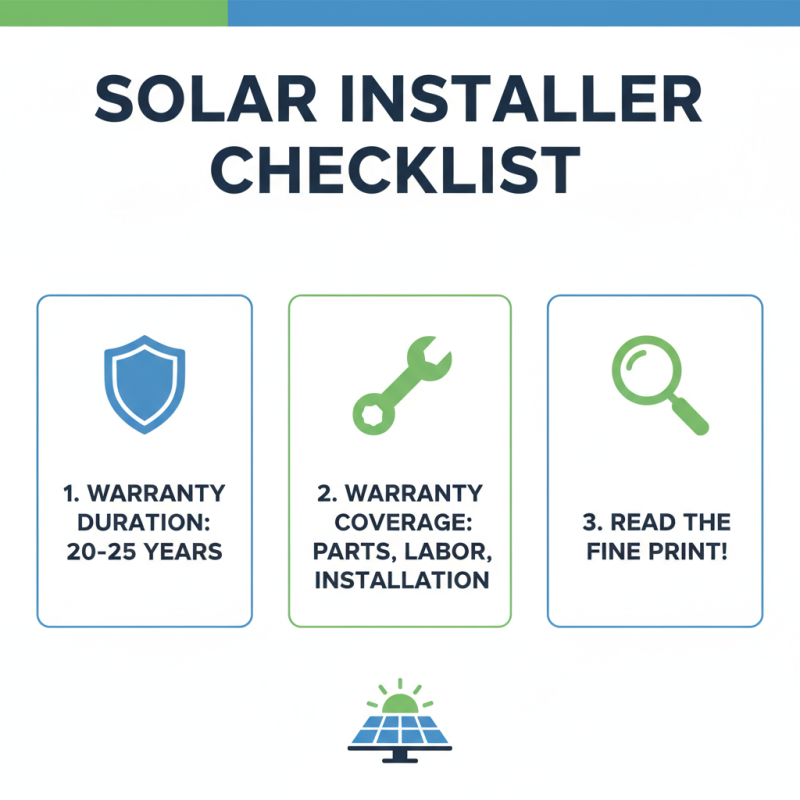
When selecting a solar installer, warranty and maintenance options are crucial. A solid warranty protects your investment. Look for providers that offer long-term warranties, ideally covering 20 to 25 years. Pay attention to what the warranty includes. Does it cover parts, labor, and installation? Knowing the fine print can save you headaches later.
Maintenance is equally important for solar systems. Regular checks ensure your system operates efficiently. Some installers offer maintenance packages. These can be beneficial, yet their value varies greatly. Consider if the cost aligns with your solar system’s performance. You might not need frequent maintenance, but unexpected fixes can be pricey.
Evaluate how often you will require service. A well-maintained system does not just ensure performance; it also extends its lifespan. Understand that not all installers provide the same level of service or care. Don't hesitate to ask for references or case studies. Taking the time to investigate can make all the difference.