Choosing the best solar rooftop system in 2026 is not simply a matter of selecting panels with the highest rated output. The right choice depends on roof direction, shading, usable area, household electricity use, and local weather. A chimney shadow at noon can matter more than a small difference in panel efficiency. So can the inverter, which converts the panels’ direct-current output into usable household electricity.
“Solar is the new king of electricity markets around the world,” said Fatih Birol, executive director of the International Energy Agency, in 2020. That broad observation helps explain solar’s momentum, but it does not identify the best system for every home. A rooftop setup should be judged by its expected annual production, equipment warranties, monitoring tools, installation quality, and total cost—not by a sales headline alone. Battery storage may help households use more solar power after sunset, but it adds cost and is not essential for everyone.
There is no perfect roof. Before comparing proposals, check whether each estimate clearly states the system size, expected output, and assumptions about shade. Ask who will install the equipment and how performance issues are handled. Even careful forecasts can miss real-world conditions; trees grow, and household habits change. The strongest choice is the one that fits the roof and budget, with its trade-offs plainly explained.
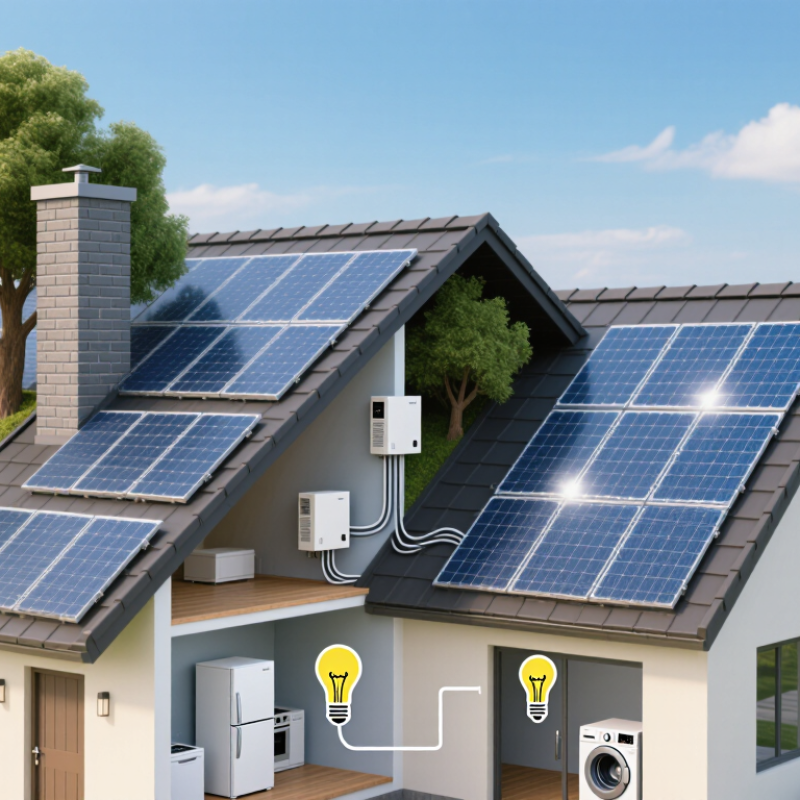
The best solar rooftop system depends on your roof, electricity use, and backup needs. A grid-tied system connects solar panels to an inverter and the public electricity network. Panels produce direct current, while the inverter changes it into usable alternating current. Extra power may flow to the grid under local rules. This design usually costs less because it does not require batteries.
A hybrid system adds battery storage to the same basic setup. During sunny hours, the battery stores unused energy for evening use or short outages. An energy management system controls charging, household consumption, and grid exchange. Batteries need suitable ventilation, temperature control, and safe installation. They also lose some capacity over time. That detail is easy to overlook.
An off-grid system works without a utility connection. It needs enough panels, batteries, and backup equipment for cloudy periods. Some homes use microinverters, with one unit serving each panel. Others use a central inverter, which may simplify maintenance but creates a single key failure point. Roof direction, shading from nearby trees, cable distance, and local weather all affect performance. A professional site assessment should check structural strength and electrical protection. In practice, production estimates can disappoint when winter shade is underestimated. My own preference is not always the most practical choice. A modest system with clear monitoring may serve a household better than an oversized design.
The best rooftop solar system is not universal. It must match the roof, climate, electricity use, and local grid rules. A professional site assessment checks roof age, shade patterns, structural strength, and cable routes. A south-facing roof may perform well, but nearby trees can reduce output sharply during winter.
High-efficiency solar modules produce electricity, while an inverter converts it into usable household power. Modern systems often include module-level power electronics, allowing safer monitoring when one panel is shaded. Strong racking must resist wind, rain, and thermal movement. Stainless fasteners and sealed roof penetrations matter more than glossy specifications. Small details matter.
A battery can store daytime energy for evening use, but its value depends on tariffs and outage needs. Monitoring equipment should show daily production, consumption, and unusual drops. Surge protection, isolation switches, grounding, and correctly sized wiring support dependable operation. These parts require qualified installation and inspection under applicable electrical standards.
Reliability also depends on maintenance. Dust, pollen, and bird debris can collect around panel edges. Cleaning schedules should follow local conditions, not a fixed promise. I would not choose a system from efficiency numbers alone. A slightly smaller array with better roof access may be safer and easier to service. Even careful designs can miss future shade from a growing tree. Recheck assumptions before signing.
The best rooftop system is not simply the largest or most efficient option. It must match a home’s roof, electricity use, budget, and local climate. Roof age comes first. Installing panels on worn shingles may create avoidable removal costs later. Orientation and shading matter too. A south-facing roof usually receives strong sunlight, but east-west layouts can better match morning and evening consumption.
Berkeley Lab’s 2024 Tracking the Sun report found that the median residential system installed in the United States was about 7.4 kilowatts. That number is useful, but it is not a universal target. A home with heat pumps may need more capacity. A smaller household may waste money on excess generation. I would avoid trusting a sales estimate without reviewing twelve months of utility bills. Forecasts can be wrong.
Battery storage deserves careful testing. It can reduce evening grid purchases, but its value depends on tariffs, outages, usable capacity, and replacement costs. The IEA PVPS Trends in Photovoltaic Applications 2024 report recorded global solar capacity above 1.4 terawatts by the end of 2023, showing rapid adoption. Rapid growth does not remove household differences. Check inverter efficiency, battery round-trip losses, monitoring quality, fire safety, warranties, and installer credentials. The cheapest quote may exclude roof repairs, permitting, or future service. That detail matters.
What Is the Best Solar Rooftop System in 2026?
Choosing the best solar rooftop system starts with the roof, not the product label. Measure the roof first. High-efficiency panels produce more energy from limited space, but efficiency alone can mislead. A shaded panel may underperform a larger panel in clear sunlight. Look for strong temperature performance, low annual degradation, and certified safety testing. Warranty terms deserve careful reading. Installation quality matters just as much.
The inverter controls how efficiently sunlight becomes usable electricity. String inverters usually cost less and suit roofs with consistent sunlight. Module-level inverters can reduce shading losses across complex roof designs. Ask about maximum power-point tracking, surge protection, monitoring, and replacement access. An inverter can appear impressive on paper but perform poorly when ventilation is limited. This detail is easy to overlook.
Battery selection depends on evening demand, outage risks, and available installation space. Lithium iron phosphate batteries offer strong cycle life and stable thermal behavior, while usable capacity matters more than advertised capacity. A battery that is too large may sit underused for much of the year. A small battery may discharge before morning. Review round-trip efficiency, depth-of-discharge limits, warranty conditions, and emergency shutdown procedures. I would also question optimistic savings estimates. Weather changes, household habits, and future electricity rates can weaken them. A qualified installer should show production assumptions, roof-load calculations, and maintenance requirements in writing.
| System Component | Technology or Option | Typical Rated Range | Typical Efficiency | Expected Service Life | Main Advantages | Key Limitations | Best Fit |
|---|---|---|---|---|---|---|---|
| Solar Panels | |||||||
| Solar panel | Monocrystalline silicon, including modern high-efficiency designs | 400–650 W per residential module | 21%–24% | 25–30 years of power production | High efficiency, widely available, strong performance on limited roof area | Higher upfront cost than lower-efficiency alternatives; output decreases in high temperatures | Most residential rooftops and space-constrained installations |
| Solar panel | Back-contact or other premium crystalline designs | 400–700 W per residential module | 22%–25% | 25–30 years of power production | Very high power density and reduced balance-of-system requirements per kilowatt | Usually carries a higher purchase price; availability varies by market | Small roofs where maximum annual energy is the priority |
| Solar panel | Thin-film technology | Varies widely by module format | 10%–19% | 20–30 years, depending on construction | Can perform well in diffuse light and may have favorable temperature behavior | Lower power density requires more roof area; less common for standard homes | Large roofs, lightweight structures, or specialized architectural applications |
| Solar panel | Typical temperature coefficient | Approximately −0.24% to −0.35% per °C above the rated test temperature | Lower absolute value generally means better hot-weather performance | Applies throughout the operating life | Useful for comparing expected output in hot climates | Actual energy yield also depends on shade, orientation, soiling, and ventilation | Hot regions where summer operating temperatures are high |
| Inverters | |||||||
| Inverter | String inverter | Common residential sizes: approximately 3–15 kW AC | Peak efficiency typically 97%–99% | About 10–15 years; some units may be designed for longer operation | Lower cost per watt, centralized maintenance, suitable for simple roof layouts | Partial shading or different roof orientations can reduce string performance | Unshaded roofs with one or a few consistent roof orientations |
| Inverter | Microinverter | Approximately 0.2–0.6 kW AC per module | Peak efficiency typically 95%–98% | About 15–25 years | Module-level optimization, strong shade tolerance, and detailed monitoring | Higher equipment cost and more electronics installed on the roof | Roofs with shade, multiple orientations, or complex module layouts |
| Inverter | Hybrid inverter | Approximately 3–15 kW AC for many residential systems | Approximately 96%–99% in grid-connected operation | About 10–15 years | Combines solar conversion, battery charging, and backup-control functions | More complex design; backup capability may require additional equipment and load management | Homes planning to add batteries or operate selected loads during outages |
| Inverter | Backup and grid-forming capability | Depends on inverter and battery system design | Power is limited by continuous and surge ratings | Usually aligned with inverter service life | Can keep essential circuits operating during a grid outage | A standard grid-tied inverter normally shuts down during an outage for safety | Areas with frequent outages, provided local interconnection rules permit it |
| Battery Storage | |||||||
| Battery | Lithium iron phosphate (LFP) | Common modular units: approximately 5–20 kWh usable per module or cabinet | Round-trip efficiency typically 90%–95% | Approximately 4,000–8,000 cycles under suitable operating conditions | High thermal stability, long cycle life, and strong suitability for daily cycling | Heavier and larger than some alternatives; usable capacity depends on operating limits | Most homes seeking daily energy shifting and reliable backup |
| Battery | Lithium nickel manganese cobalt oxide (NMC) | Common modular units: approximately 5–15 kWh usable | Round-trip efficiency typically 90%–95% | Approximately 2,000–5,000 cycles, depending on depth of discharge and temperature | High energy density and compact footprint | Requires careful thermal management and normally has a shorter cycle life than LFP | Homes with limited installation space and moderate cycling requirements |
| Battery | Lead-acid | Common systems: approximately 5–20 kWh nominal capacity | Round-trip efficiency typically 70%–85% | Approximately 500–1,500 cycles, depending on battery type and discharge depth | Lower initial cost and established technology | Shorter service life, greater weight, lower usable capacity, and more maintenance for some designs | Budget-sensitive or occasional-backup applications with adequate space |
| Battery | Recommended daily depth of discharge | Often designed around 80%–90% usable depth for lithium systems | Usable energy is lower than nameplate capacity | Shallower cycling generally reduces long-term stress | Helps balance backup needs, energy savings, and battery longevity | Oversizing the battery increases cost and may leave capacity underused | Systems sized to actual evening consumption and outage priorities |
| System-Level Comparison | |||||||
| Complete rooftop system | Solar panels + string inverter + no battery | Typical residential array: approximately 5–12 kW DC | High daytime conversion efficiency | Panel life generally exceeds inverter life | Lowest complexity and usually the lowest installed cost | Limited evening energy savings and normally no outage protection | Homes with reliable grids and substantial daytime electricity use |
| Complete rooftop system | Solar panels + microinverters + no battery | Typical residential array: approximately 5–12 kW DC | Module-level optimization; system yield depends on roof conditions | Panels typically 25–30 years; microinverters commonly 15–25 years | Good performance on shaded or multi-directional roofs | Higher upfront cost compared with a basic string-inverter design | Complex roofs where maximizing module-level production matters |
| Complete rooftop system | Solar panels + hybrid inverter + LFP battery | Typical residential array: approximately 5–12 kW DC plus 10–20 kWh usable storage | Solar-to-battery round-trip efficiency commonly about 85%–95% | Panels 25–30 years; inverter about 10–15 years; battery approximately 10–15 years in many duty cycles | Balances self-consumption, time-of-use savings, and essential-load backup | Highest upfront cost; requires correct sizing, ventilation, controls, and permitting | Best all-round option for many 2026 homes seeking backup and higher self-consumption |
| Complete rooftop system | Oversized solar array + small battery | Solar capacity sized above average daytime demand with approximately 5–10 kWh usable storage | Depends on inverter and battery operating mode | Panel life generally exceeds inverter and battery life | Can improve annual solar production while controlling battery cost | May not provide long-duration backup during extended outages | Homes with high daytime loads and short, infrequent outages |
| Complete rooftop system | Large battery + moderate solar array | Often approximately 10–20 kWh usable storage with a 5–10 kW DC array | Battery losses reduce the energy available for later use | Battery life depends heavily on cycling frequency and temperature | More useful for evening consumption and short power outages | More expensive per unit of annual solar generation if the array is undersized | Homes with high evening demand or strong backup priorities |

What Is the Best Solar Rooftop System in 2026?
A strong rooftop system should perform well, remain affordable, and have clear warranty protection. Begin with measured energy output, not advertised capacity alone. Ask how much electricity the system produced during cloudy weeks and winter mornings. A reliable installer should provide local production estimates, shading analysis, and equipment test records. Check whether the design matches your roof angle, household usage, and future electricity needs. Bigger is not always better.
Tips:
Request a written quote with labor, permits, monitoring, maintenance, and grid connection costs included. Compare the estimated yearly savings with the total installed price. A low upfront cost may hide replacement fees or weak after-sales support. Ask for the expected performance after ten years, not only during the first year. Small details matter, especially cable routes and roof penetrations.
Warranty terms deserve careful reading. Separate product coverage, installation workmanship, and performance guarantees. Confirm who handles claims and how quickly repairs are normally completed. Some warranties sound generous but exclude damage caused by moisture, storms, or poor installation. Keep photographs of the roof before work begins. They may help later. I would not rely on verbal promises, even from an experienced contractor. A system can look excellent on paper and still disappoint if monitoring is unclear or maintenance access is difficult. Good decisions require evidence, realistic assumptions, and room for uncertainty.